Honey comes in a wide range of colors, from pale yellow to deep brown. The color usually points to the flavor. Knowing the general pattern helps you choose a jar you will enjoy. It is not a strict rule, but it is a reliable starting point when you stand in front of a shelf of jars and cannot decide.
Color comes mostly from what the bees gathered. Nectar from different flowers carries different natural pigments and minerals, and those also shape the taste. Generally, the darker the nectar source, the stronger the flavor. Color can also deepen a little with age and warmth, so a jar that has sat for a long time may look darker than it did at first.
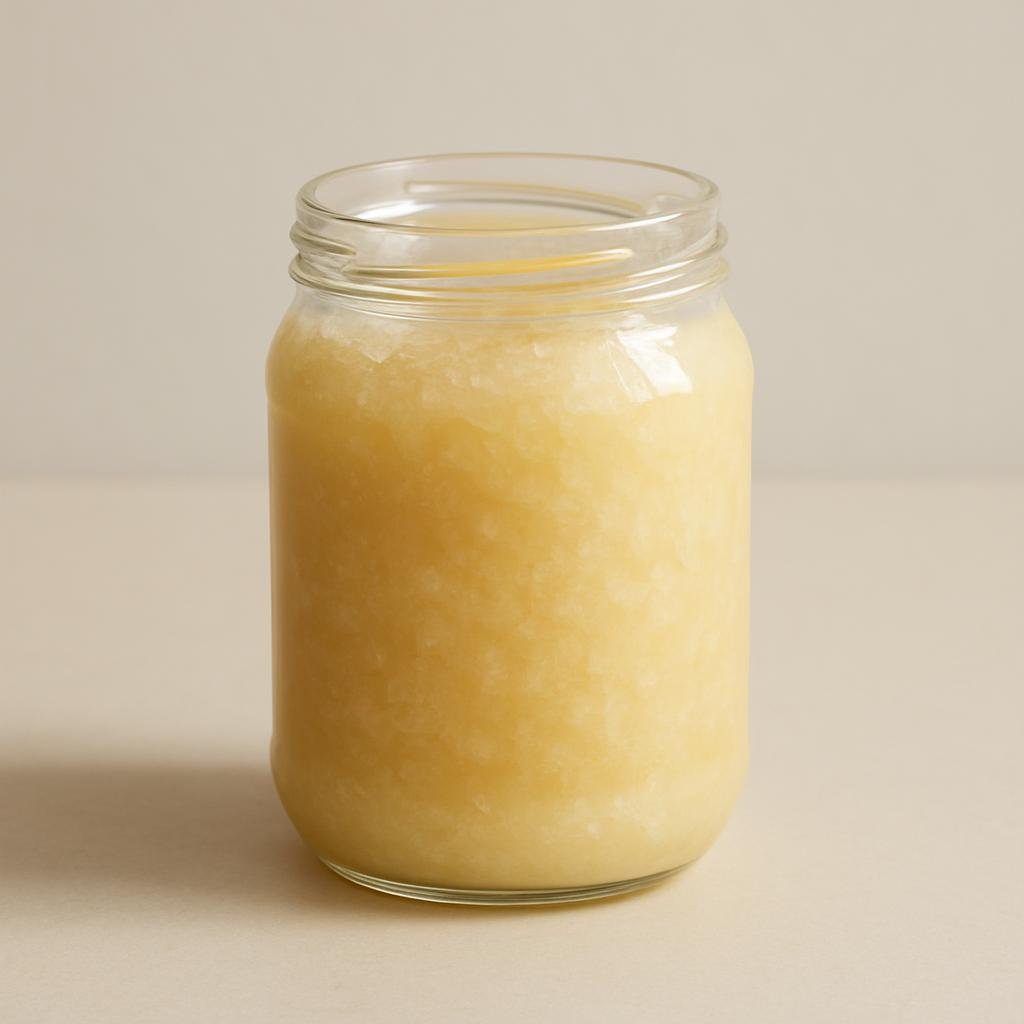
Lighter honeys tend to taste mild, floral and delicate. They suit tea, yogurt and anything where you do not want honey to overpower the other flavors. They are also a good place to start if you are new to raw honey. Their gentle character lets you notice the sweetness first and the flowers second, without anything sharp or heavy getting in the way.
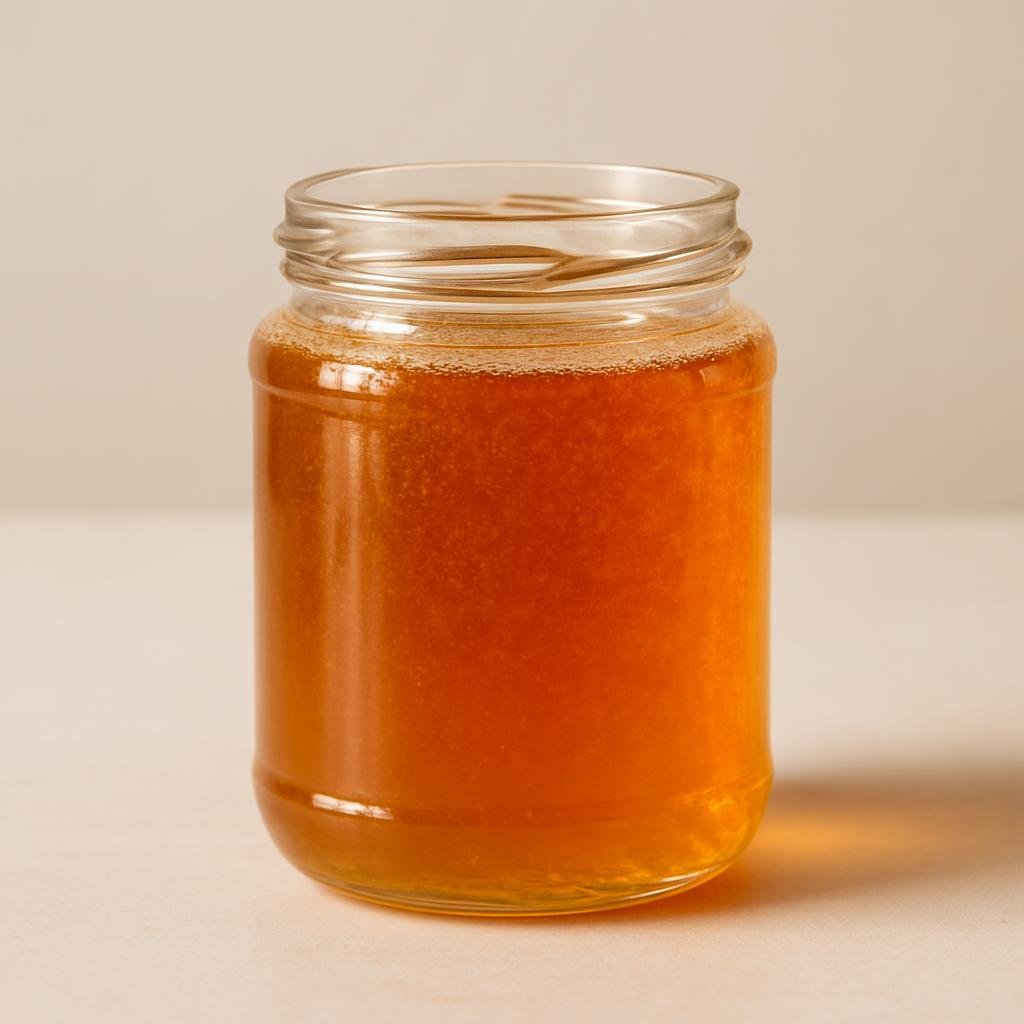
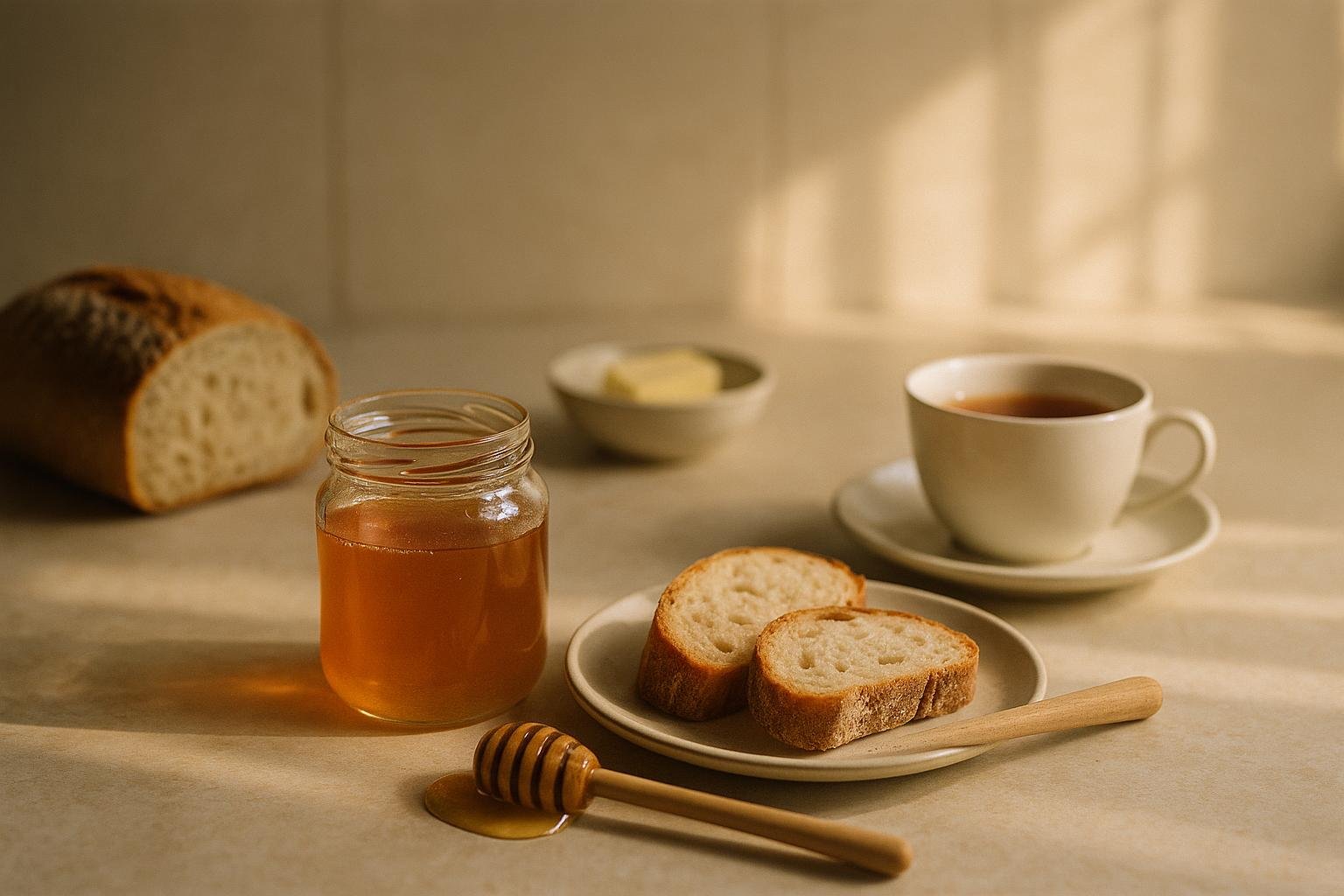
Golden amber honey sits in the middle. It has a rounder, fuller sweetness and works for nearly everything, from toast to cooking. If you only keep one jar in the kitchen, this is a sensible choice. It is forgiving, too. Stirred into a sauce or a glaze, it keeps enough character to be noticed without taking over the dish.
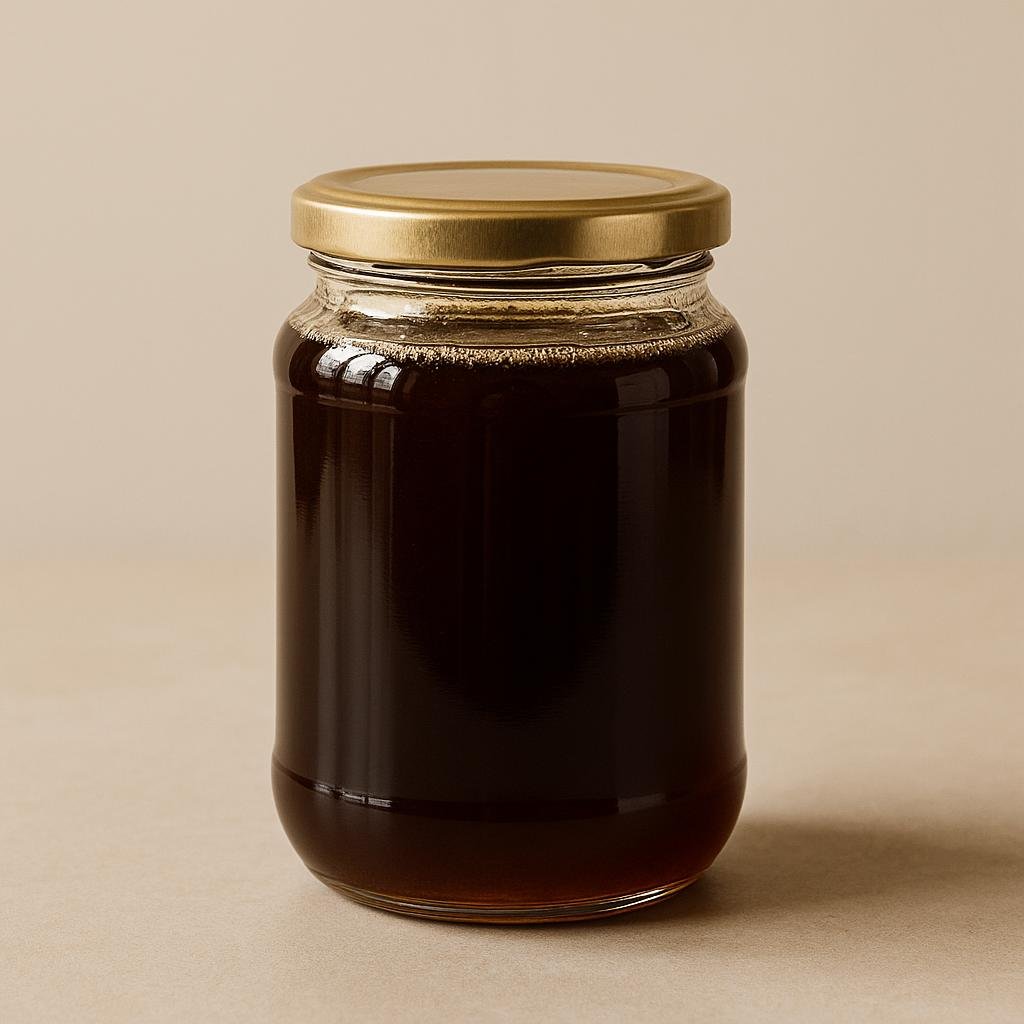
Dark honey is richer and stronger, sometimes with a deeper, almost molasses note. It stands up well to bold foods such as cheese, roasted vegetables, marinades and dark baked goods. A little goes a long way. Because the flavor is so assertive, it can feel too much in a delicate cup of tea, so save it for dishes that can match it.
Wildflower honey is a blend of whatever the bees found in bloom, so the flavor shifts from jar to jar. That variation is part of the appeal. Two jars from the same apiary can taste different. Color follows the same logic, so one jar may look pale and another a deeper gold, depending on which flowers dominated when the nectar was collected.
Texture and Clarity
Texture matters too. A clear, runny jar pours easily over pancakes, while a creamy set jar spreads like butter. Choose by how you plan to use it. Neither texture is better in itself. They are simply different forms of the same food, and the choice comes down to whether you want to drizzle, spoon or spread.
Raw honey can look a little cloudy, and that is normal. Tiny particles of pollen and wax stay suspended in it, since raw honey is not filtered as finely as many shelf brands. Cloudiness does not change what the color tells you about flavor, but it can make a light honey look slightly duller than it really is.
Judge color in good light. A jar held up to a window shows its true shade, while the same jar on a dim shelf can seem much darker. The depth of the jar matters as well. A thick glass or a wide container makes honey look deeper in color, so compare jars of similar shape when you can.
Flavor notes are harder to describe than color, but a few words help. Light honey may taste of citrus, clover or fresh blossoms. Amber honey often tastes of warm sugar and a little butter. Dark honey can taste of malt, toffee or spice. These are loose comparisons, and your own tongue will find different words, which is fine.
Matching Honey to Food
Think about what else is on the plate. A strong honey drizzled over a mild food can dominate it, and a mild honey added to a strong food can vanish. The goal is balance. Pair delicate with delicate, bold with bold, and use the amber in between when you want something that fits without needing much thought.
Cooking changes things. Heat softens delicate floral notes, so a pale honey stirred into a hot dish may taste plainer than it did from the jar. Dark and amber honeys hold their character better. If you are baking, remember that honey browns faster than sugar, and that darker honeys add their own color and taste to the finished crumb.
For tea, a light honey is usually the safest choice, though plenty of people enjoy a dark honey in a strong black tea. For cheese boards, try a small spoonful of dark honey beside a sharp or salty cheese. For yogurt and fruit, reach for the lightest jar. None of this is a rule, only a sensible place to begin.
Finding Your Favorite
If you are unsure, try one light and one dark side by side on plain bread. The difference is obvious, and you will quickly learn which you reach for. Use a clean spoon for each jar, and take a sip of water between tastes so the first honey does not linger and color how you judge the second.
Once you know your preference, add a third jar in the middle and notice where it lands. Many people find they favor the amber for daily use and keep a light or dark jar for particular jobs. That is a perfectly good way to shop: one honey for the everyday, and one for the occasions that call for something specific.
Taste again from time to time. Your preferences can shift with the seasons and with what you cook, and because wildflower honey changes from jar to jar, a new jar is a small chance to learn something. Color is a guide, not a verdict. Let it point you toward a jar, then let the flavor decide.