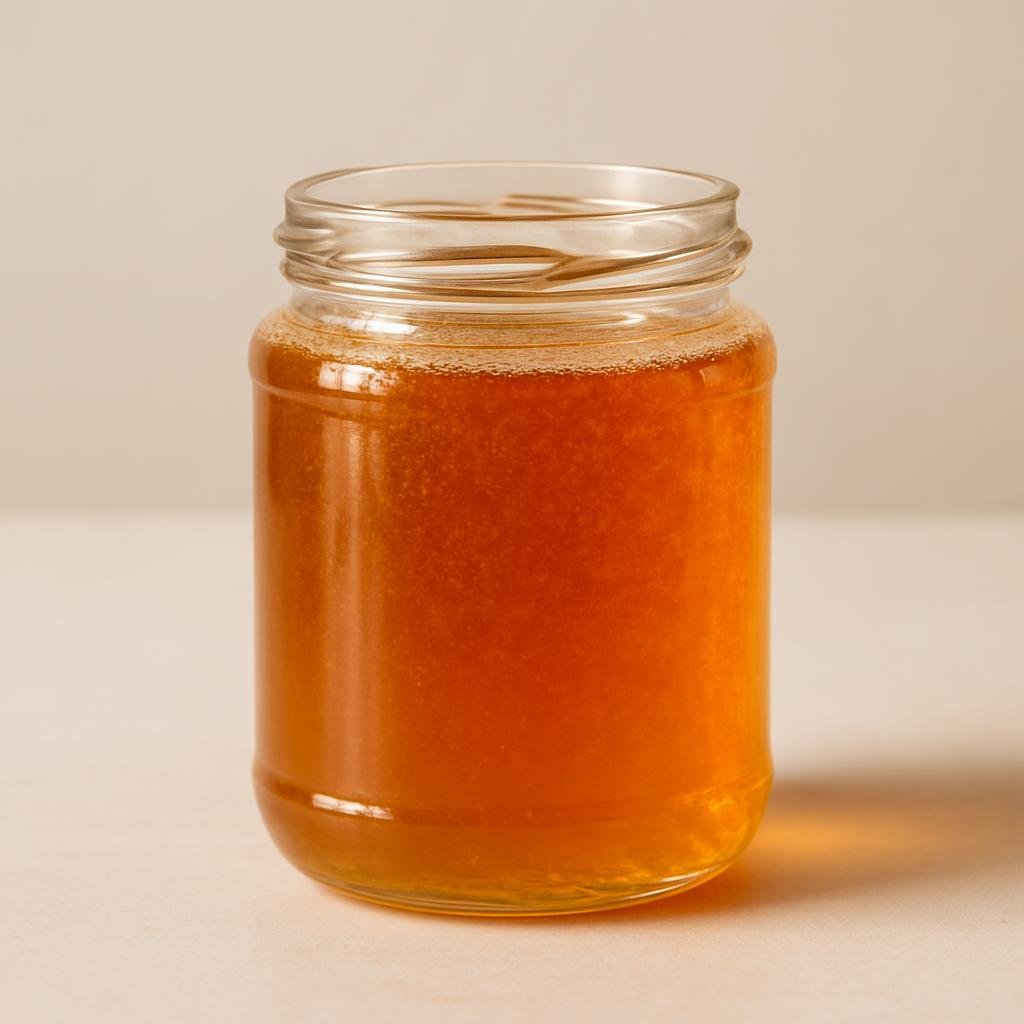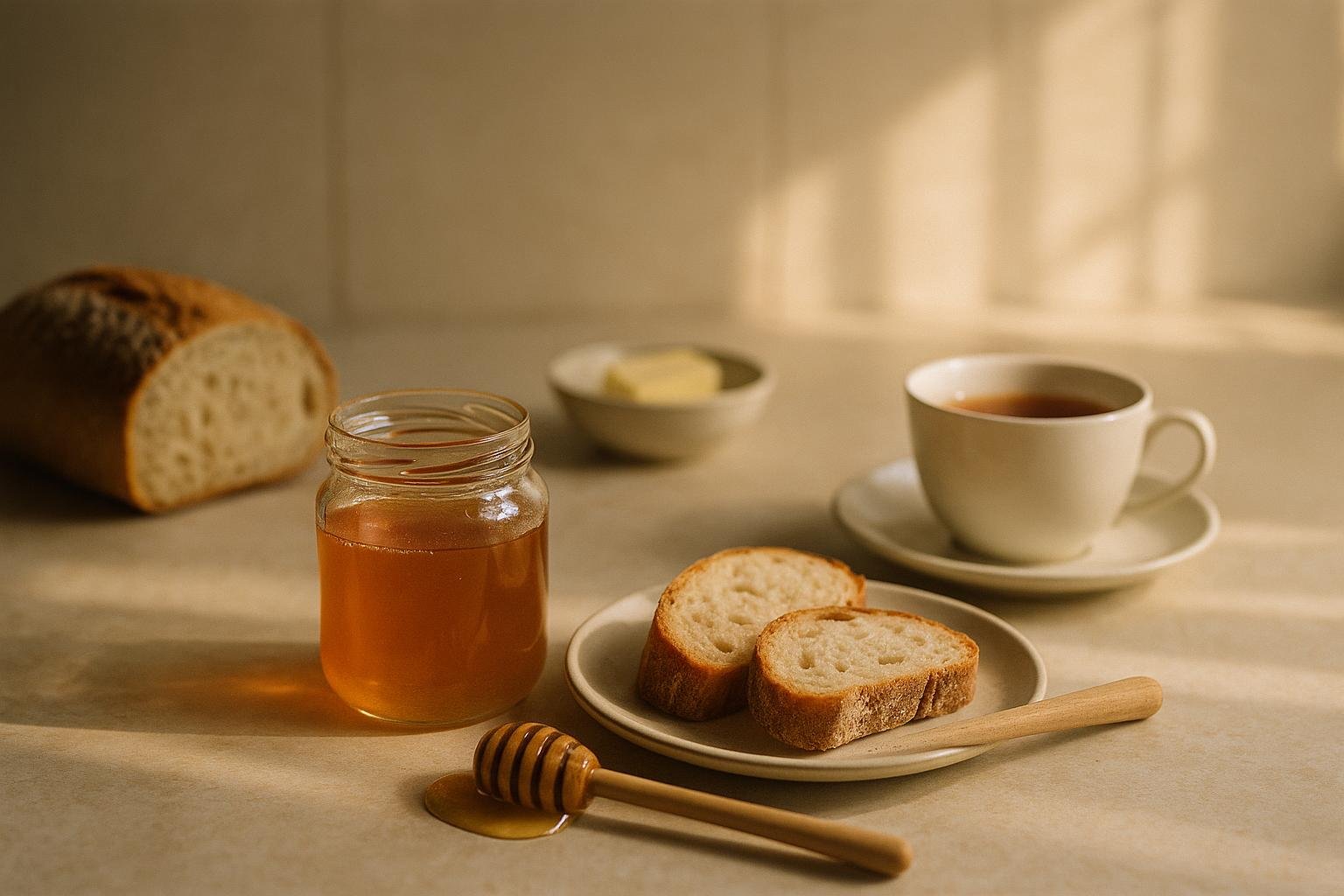
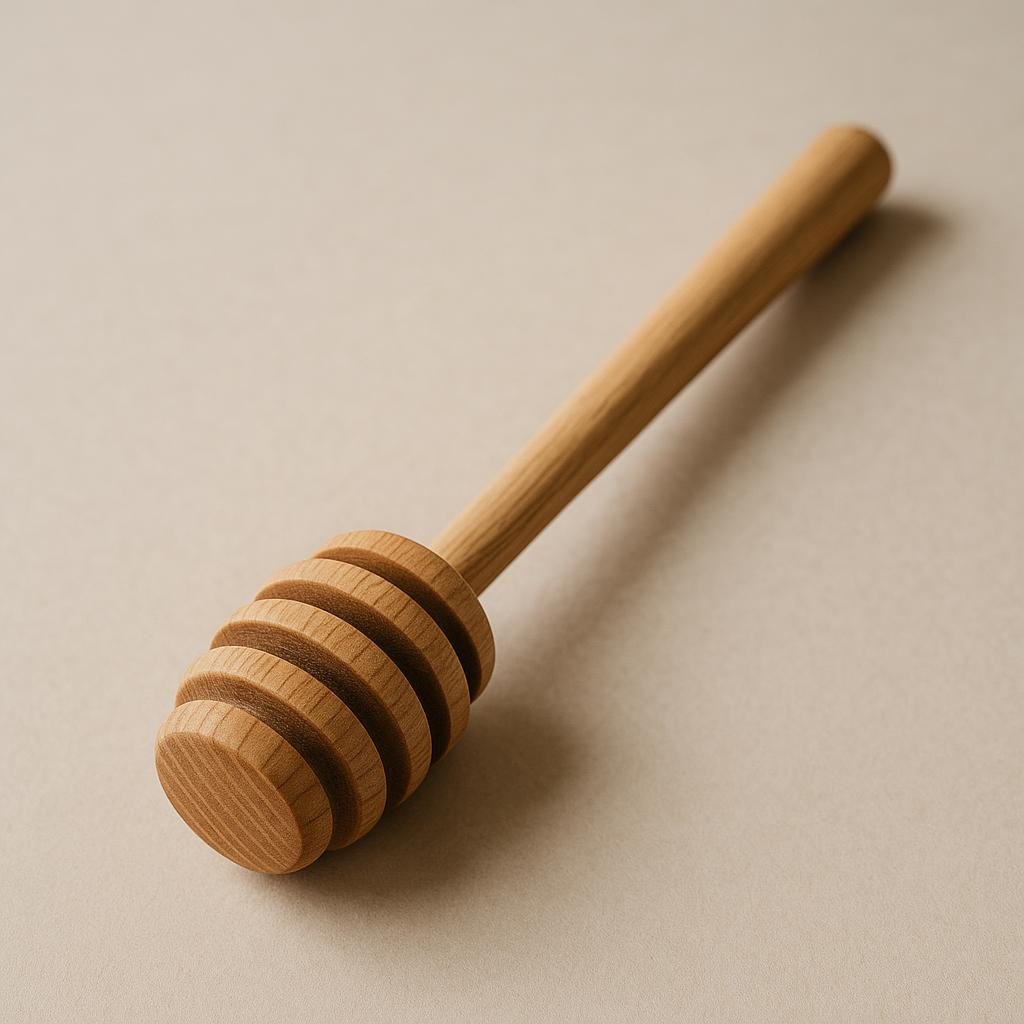
A wooden honey dipper is a simple tool that makes honey much easier to serve. The grooved head holds a good amount of honey, and you control the flow by turning it. It saves a lot of sticky spoons and knives. Once you get used to one, it is hard to go back to a knife dragged across the jar rim. It is a small thing that earns its place on the table.
The design is old and plain for a reason. Honey is thick, and a smooth spoon lets it slump off in a single heavy drop. The ridges on a dipper break that mass into thin ribbons held between the grooves by surface tension, so honey clings until you decide to let it go. Nothing mechanical is involved, only shape and patience. It is a clever bit of everyday design.
To use one, lower the dipper into the jar and turn it a few times so honey collects in the grooves. Lift it out and keep turning it as you move to your cup or plate. The spinning keeps the honey from dripping on the way. Think of it as a slow, steady motion rather than a quick twirl, and you will lose very little on the trip.
Hold it over the mug or bread and let the honey slide off slowly. Rest the dipper over the jar for a moment afterward so the last drips fall back in. This keeps the counter clean. A small saucer nearby is handy if you are serving several cups, since you can set the dipper down without leaving a puddle on the table or the counter.
Getting the Turn Right
Most beginners turn too fast. A quick spin can fling a thin string of honey across the table, especially when the dipper is loaded to the top. A gentle, unhurried rotation is plenty to keep the honey in place. If the honey is running thinly, slow down even more and let gravity do its share of the work. Patience beats speed here every time.
How deep you dunk matters too. Lowering only the grooved head picks up a tidy load. Pushing the dipper far down the handle leaves honey on the wood where your fingers will land. Pull it straight up out of the jar, pause for a breath, and let the first heavy strand break away before you start moving toward the cup. That small pause saves a lot of wiping.
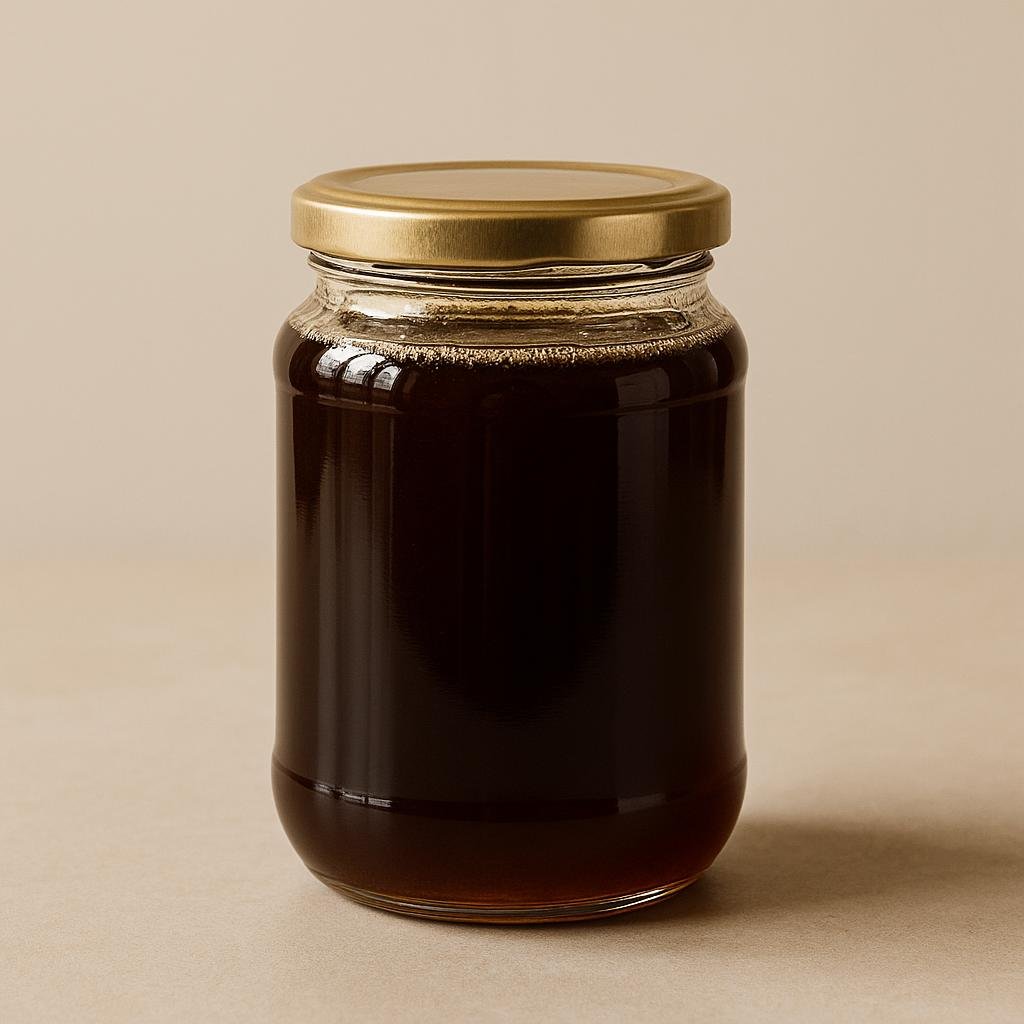
Temperature changes how honey behaves. Honey kept in a cool kitchen is thicker and clings to the grooves well, but it pours slowly. Honey in a warm room runs more freely and can slip off sooner. Neither is a problem. You simply adjust your turning, quicker and steadier when the honey is thick, slower and more careful when it is loose and runny.
For drizzling over toast or yogurt, hold the dipper a little above the food and keep it turning slowly as the honey falls. You can lay down a neat zigzag or a small pool. For stirring into tea, lower the head into the cup and rotate it, and the honey releases into the hot liquid more evenly than it does when it slides off a spoon in one lump.
Why Wood Suits the Job
Wood is a good material for the job because it is gentle on glass jars and does not clink or scratch. It also feels warm in the hand. Wood does need a little care, though. Metal and plastic shrug off water, but wood takes it in, and that is the thing to keep in mind whenever you clean and store your dipper between uses.
Different woods behave a little differently. Close-grained hardwoods such as beech or maple tend to be smooth and resist soaking up moisture. Softer woods can feel fuzzy after a few washes. Whatever the species, a good dipper should be sanded smooth with no splinters, and the grooves should be clean and evenly cut so honey travels along them without catching. These details matter more than looks.
Look at the shape before you buy. A head with several fairly shallow grooves holds honey well and lets it release smoothly. Very deep grooves hold more but can be harder to clean. The handle should be long enough to reach the bottom of your jar while still leaving room to grip, and the head should fit through the mouth of the jar easily without scraping the rim.
Wood also carries no strong taste of its own once it is finished and dry, so it will not interfere with delicate honey. A dipper that has been rubbed with a heavy scented product can, though. If you ever treat the wood, choose a plain finish meant for kitchen wood and use it sparingly, so the dipper stays neutral. Plain is best, and most dippers never need anything at all.
Washing and Drying
Wash a dipper in warm water and dry it soon after. Avoid soaking it for long periods or running it through a dishwasher, since heat and long soaking can make wood crack or roughen. Honey rinses off easily with warm water. A soft cloth or your fingers are usually enough to clear the grooves, and a soft brush helps if a few sticky bits remain.
Let it dry fully before putting it back in a jar or drawer. Damp wood left in a closed space can go musty. Stand it upright in a cup or lay it on a rack so air reaches every side, including the base of the head. A dry dipper will last well with ordinary care, and light sanding can smooth a surface that has gone rough.
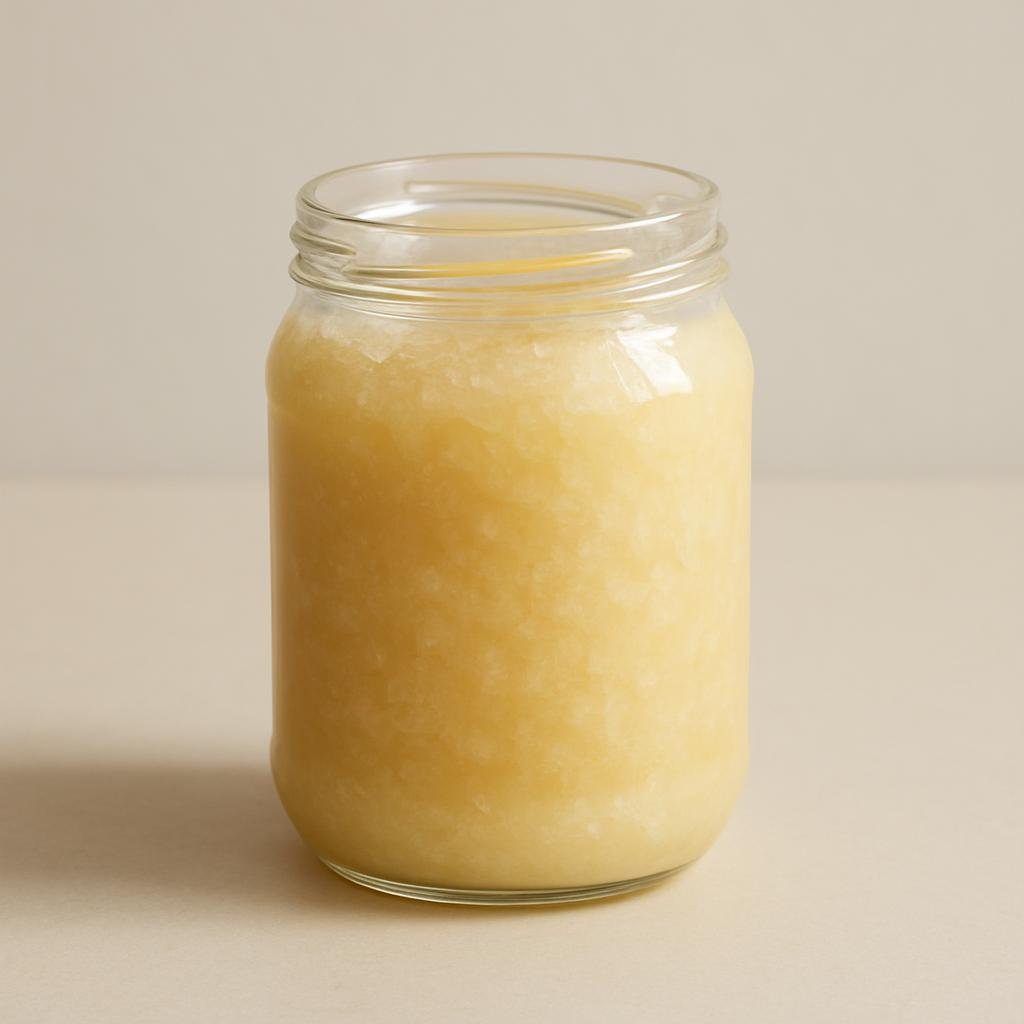
It works with set honey less well, since thick cream will not run off the grooves. For that, a spoon is the better tool. A sturdy spoon can cut into the firm honey and lift out a clean scoop. Keep the dipper for honey that flows, and your jar, your counter and your toast will all stay tidier for it.