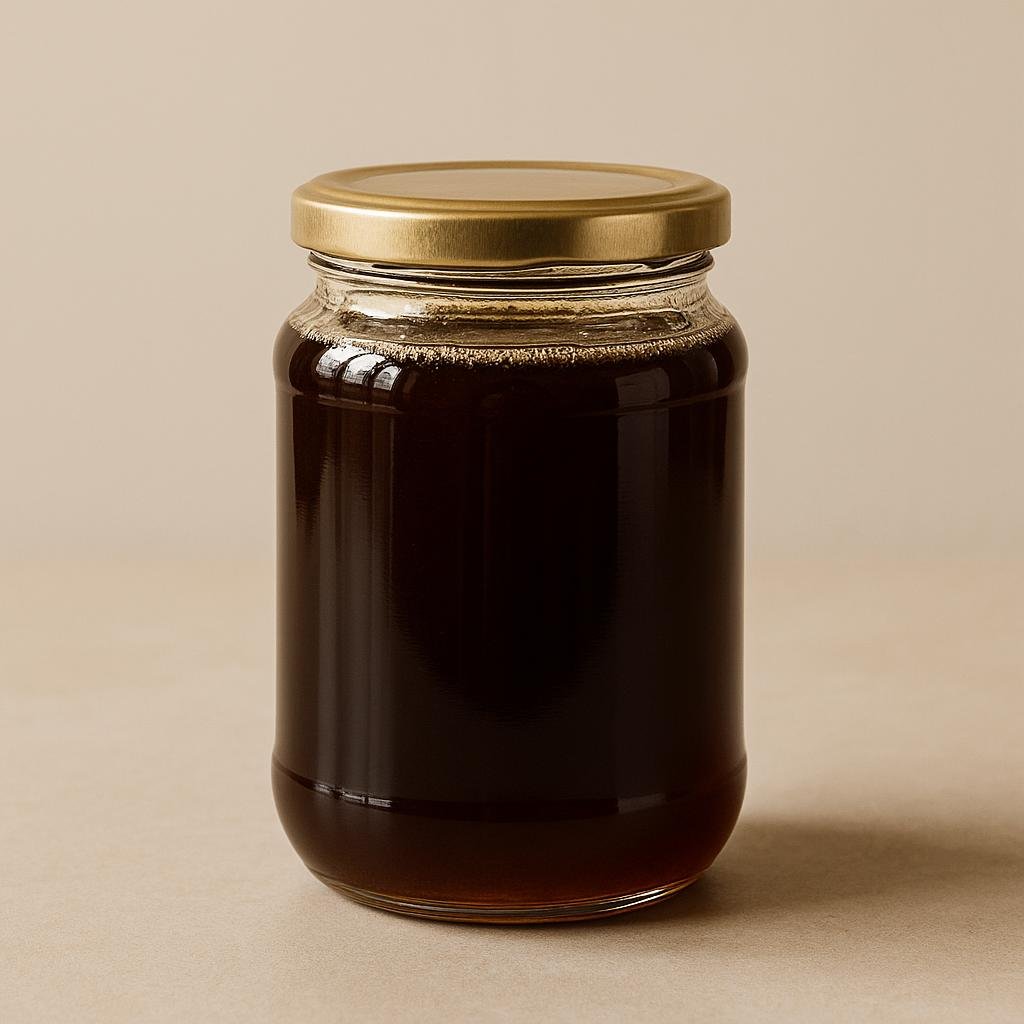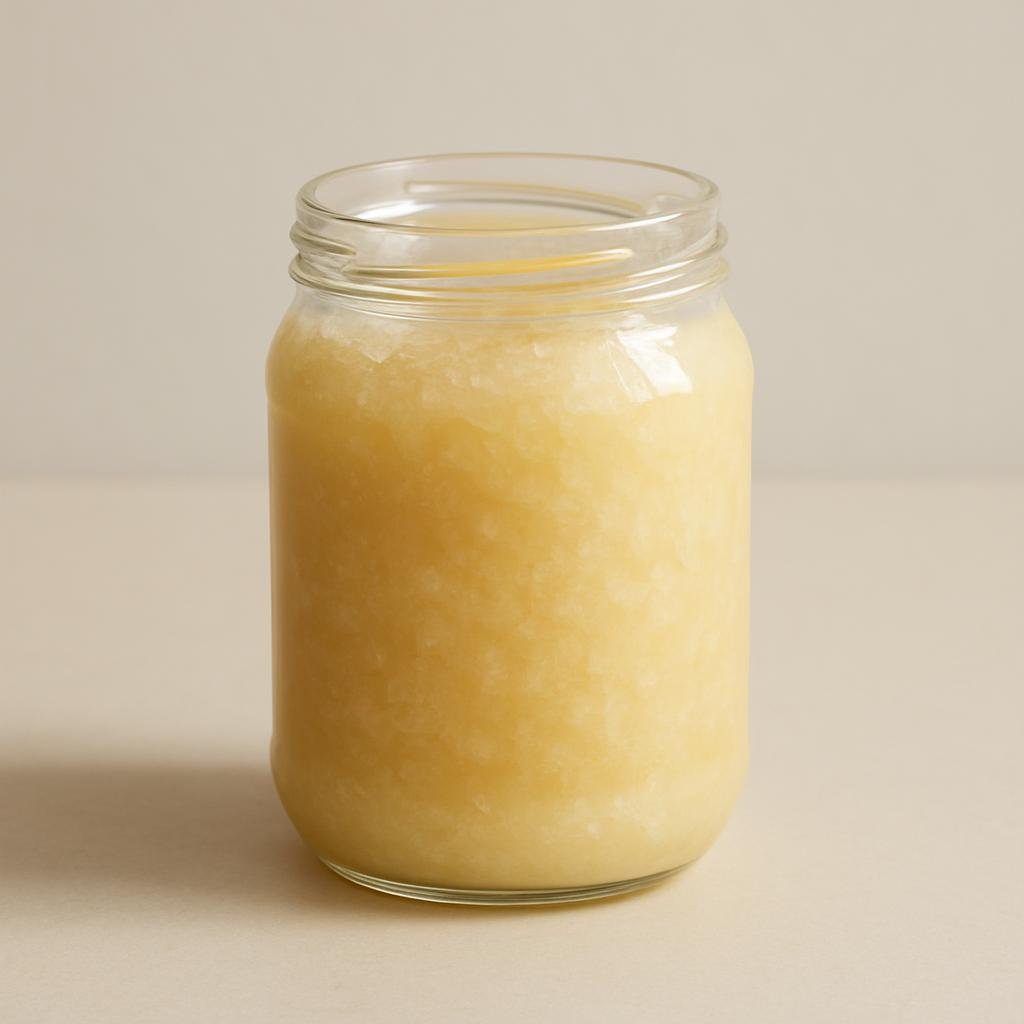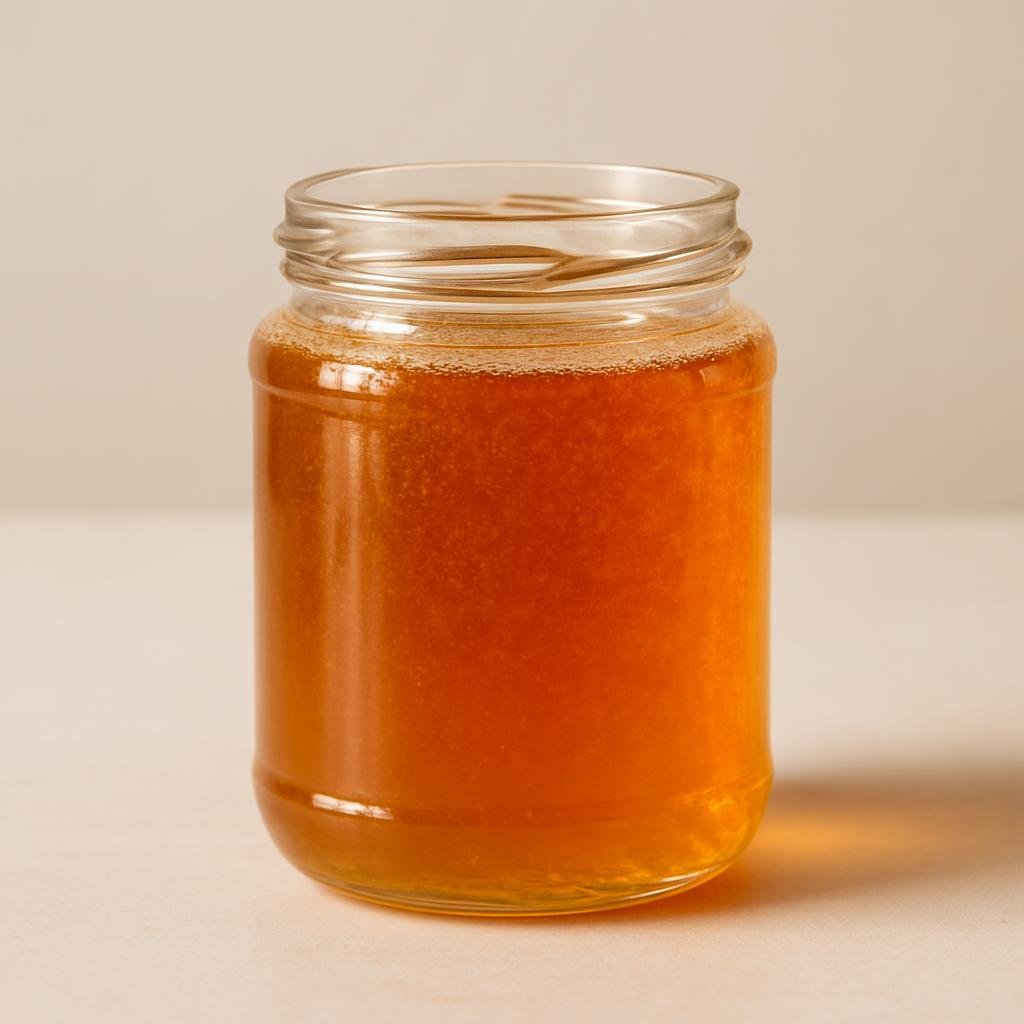
Sooner or later a jar of raw honey turns thick and grainy. This is crystallization, and it is a normal thing honey does. It is not spoilage, and the honey is still fine to eat. Plenty of people open a jar after some months, find it set solid, and assume something went wrong. Nothing did. The honey is simply changing its form.
We keep bees outside Asheville, North Carolina, and sell raw wildflower honey, honeycomb and beeswax candles, so this is a subject close to our work. The short answer is that setting is a natural behavior of real honey. The longer answer is about sugar, and it is worth knowing, because it explains how to store and use every jar you buy.
Honey is a concentrated mix of sugars, mainly glucose and fructose, with only a little water. That is a lot of sugar packed into very little liquid. In that state the honey is what chemists call supersaturated, meaning it holds more dissolved sugar than it can comfortably keep in solution. Over time, the balance tips, and the extra sugar looks for a way out.
Glucose is the sugar that tends to separate and form small crystals. Honeys with more glucose set faster than those with more fructose, which is why jars made from different flowers behave so differently. Two jars sitting side by side on the same shelf can be runny and solid within the same season. That is the nectar talking, not a flaw.
What Happens Inside the Jar
Crystals need a place to start. Raw honey keeps tiny particles such as pollen, and these give the first crystals something to form around. Once a few crystals appear, more glucose attaches to them, and the process spreads through the jar. That is one reason raw honey often sets sooner than heavily filtered honey, which has fewer of those particles.
Temperature matters as well. Cooler storage speeds crystallization up, and a jar kept in a chilly pantry or a cold kitchen will usually set sooner than one kept somewhere mild. Very cold and very warm conditions both change how the honey behaves, but for most households the lesson is simple: a cool room invites a thicker jar.
The texture varies a great deal. Some jars set into a fine, smooth cream, and others go coarse and grainy. The difference comes down to the size of the crystals. Many small crystals feel creamy on the tongue, while fewer, larger ones feel sandy. Both are the same honey, and neither tells you anything bad about its quality.
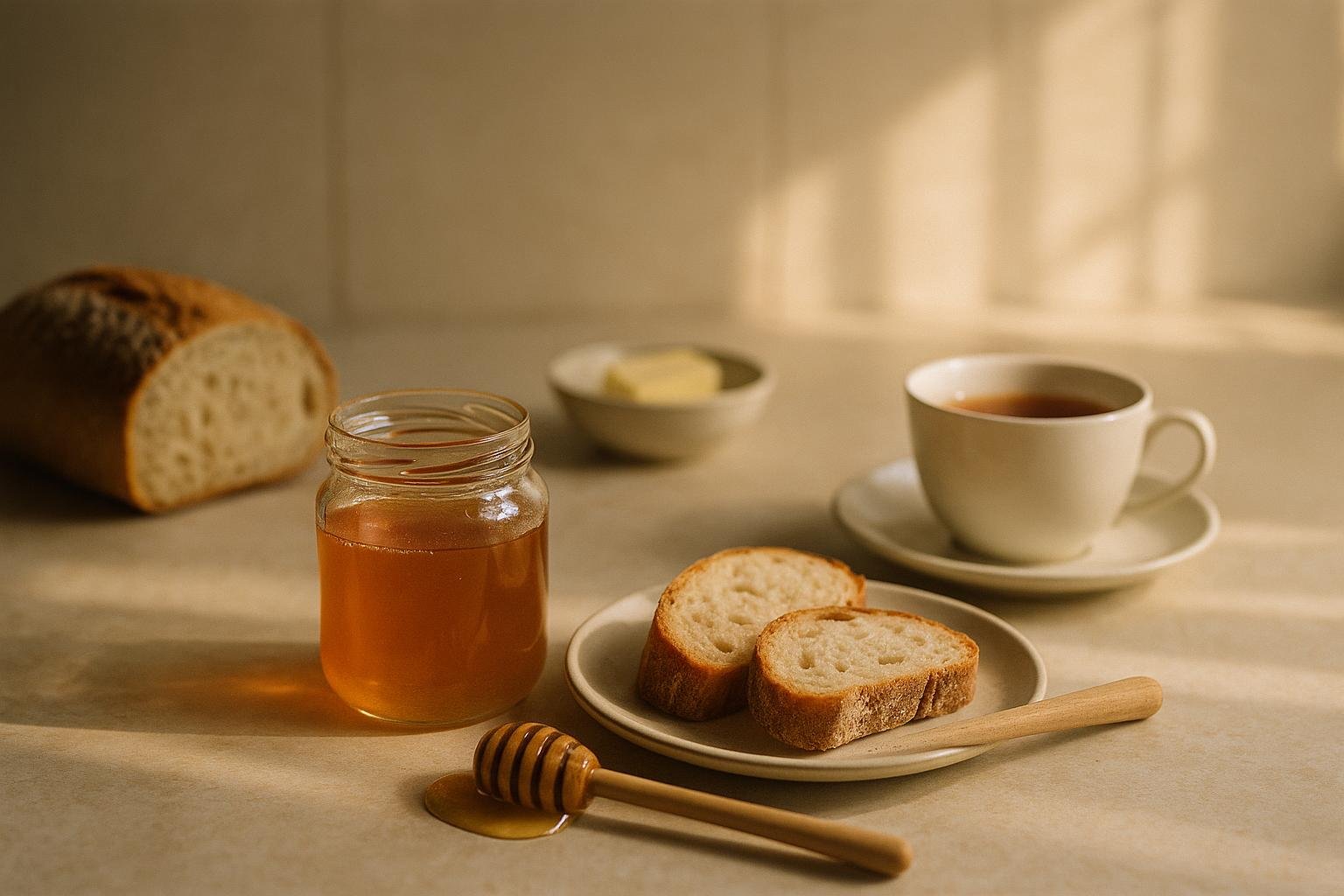
The fine, creamy kind is lovely spread on toast because it stays put instead of running off. It sits on the bread like soft butter, and you can carry a knife full of it to the table without a drip. Some people go looking for honey set this way, and enjoy it more than the runny kind.
Bringing It Back to Liquid
If you prefer your honey liquid, the fix is gentle. Stand the jar in a bowl of warm water and stir now and then. The warmth dissolves the crystals slowly, and the stirring helps them break apart and spread through the jar. Loosen the lid a little first, so the jar is not tightly sealed while it warms.
Keep the water warm rather than boiling. High heat can dull the flavor and aroma of honey, and it is the delicate floral notes that go first. A microwave or a pot on a hot burner is a common mistake, because it heats the honey unevenly and quickly. Slow and mild is always the better approach here.
Be patient, as it can take a while. A jar that has set hard may need more than one session in the water, with the water refreshed once it cools. Stir between rounds, and stop once the honey flows. If you warm it longer than needed, you gain nothing, and you risk losing some of the character you wanted to keep.
Know that liquefied honey may set again. Warming dissolves the crystals, but the sugar is still the same, and the honey will return to its natural tendency in time. Tiny crystals left behind can start the process over. If you want to avoid the cycle, consider keeping smaller jars, or simply learning to enjoy the honey either way.
Using It Just as It Is
You can also simply use it as it is. Spoon crystallized honey into tea, where it dissolves quickly, or spread it on bread, biscuits or pancakes. It is easier to portion than a runny jar, since a spoonful stays on the spoon and lands where you put it. Many cooks come to prefer it for exactly that reason.
In baking and sauces, set honey works well too, because it melts as soon as it meets heat. Scoop out what you need, stir it into a warm mixture, and the grains vanish. You do not need to liquefy the whole jar first. Taking only what you need also spares the rest from repeated warming.
Keep the lid on tight and store the jar at room temperature, away from heat. A tight lid keeps out moisture and stray odors, since honey draws water from the air, and extra water can change how it keeps. A shelf away from the stove and out of direct sun is a good home for any jar.
Do not worry if it sets, and do not worry if it stays runny. Both are honey being honey. A jar that has crystallized is not a lesser jar, and a jar that stays liquid is not a better one. Whichever you have, you are holding the same sweet, floral thing, and you can use it the way you like best.